Views: 138 Author: Sean.Lu Publish Time: 2025-11-01 Origin: Site


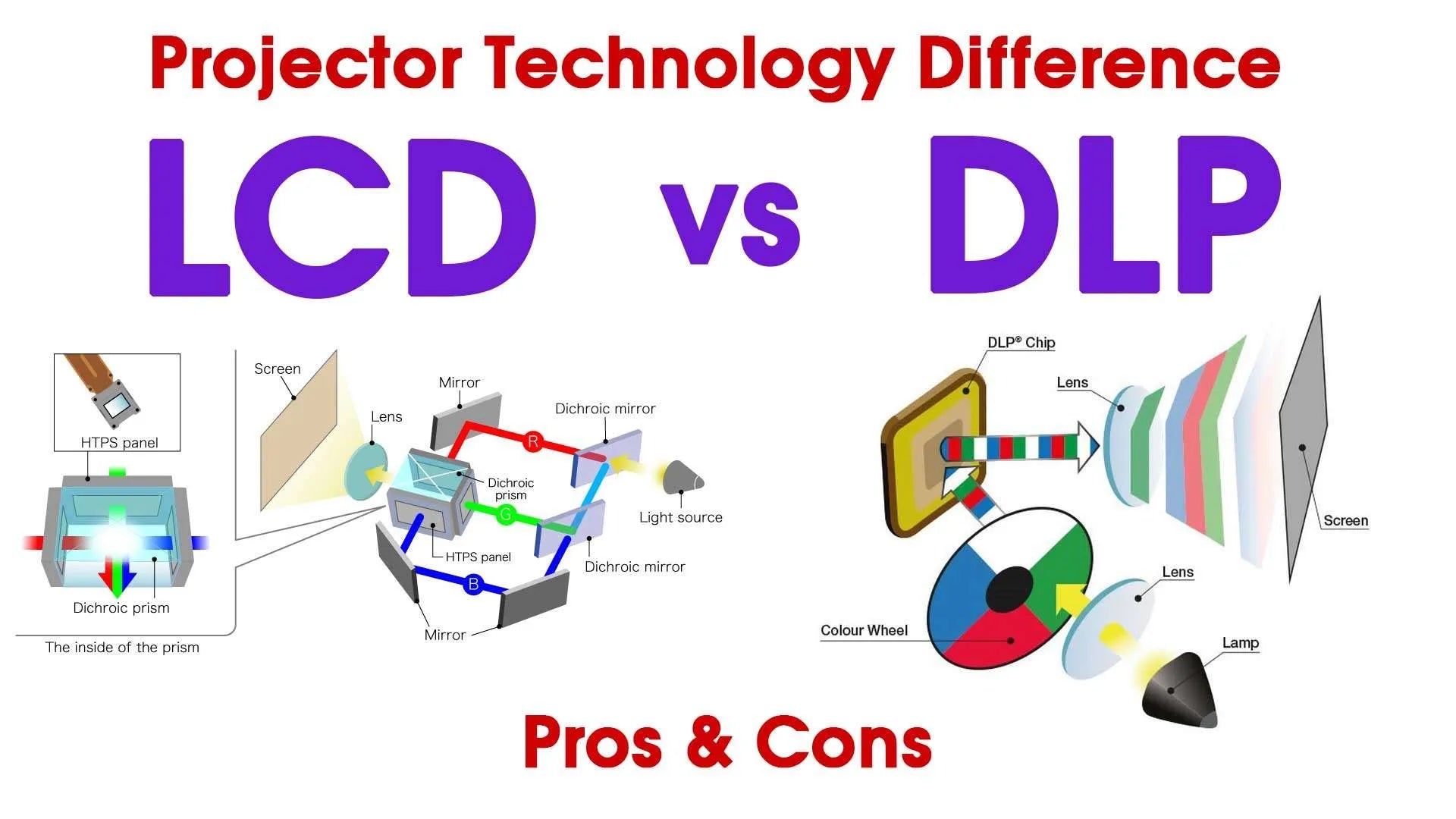
DLP (Digital Light Processing) technology was developed by Texas Instruments. Its core is the DMD (Digital Micromirror Device) digital micromirror chip. The surface of the chip is densely covered with millions of micron-sized aluminum micromirrors, and each micromirror corresponds to a pixel. DLP uses the principle of digital optical imaging. The source image is first digitized to form a binary image signal, which is then input into the DMD chip and combined with the colored light from the light source and processed by a color filter. Since the external signal does not need to be converted from digital to analog, it is directly modulated in digital form to form an image, which not only minimizes signal attenuation and noise, but also presents an image with rich digital grayscale levels, making the picture clearer and sharper, the color reproduction more realistic, and the sense of hierarchy stronger, bringing an excellent visual experience.
Sharp picture: The gap between pixels is very small (high pixel fill rate), making the edge of the picture sharp and less likely to have the "screen door effect".
High contrast: Micro lenses can achieve precise control of light, bringing excellent light and dark contrast.
Fast response speed: Suitable for high-speed motion pictures and games, with low input delay.
Relatively small size: The single-chip DLP design can make the projector smaller.
Sharp picture, high contrast, fast dynamic response
"Rainbow effect" (single-chip DLP): A few sensitive users may perceive brief red, green and blue flashes when watching (especially in scenes with strong light and dark contrast). This is caused by the high-speed rotation of the color wheel and the visual persistence of the human eye. High-end DLP has greatly alleviated this problem by increasing the color wheel speed and multi-segment color wheel design.
Color performance: Compared with 3LCD, single-chip DLP may be slightly inferior in color saturation and color accuracy. The color effect is low, not rich, and not bright and vivid, especially in green and yellow. Color reproduction is not as accurate as LCD and LCoS

Applicable users: Users who pursue image sharpness, contrast and low input delay (games). Those who are not sensitive to the rainbow effect or choose high-end DLP (high-speed color wheel). DLP is too expensive, and single DLP is more common and widely used at present.
3DLP refers to DLP projection technology that uses three DMD chips to process red, green and blue color signals respectively. Compared with single-chip DLP (1DLP) that quickly switches colors through a color wheel, 3DLP achieves full-time full-color output, avoiding the "rainbow effect" caused by the color wheel, and the image is more stable and accurate.
Parameters | Single-chip DLP | 3DLP |
Color depth | 10-bit | 12-bit |
Brightness uniformity | 85% | >95% |
Color gamut coverage | 90% DCI-P3 | 100% DCI-P3 |
Contrast ratio | 2000:1 | 10000:1 |
But 3DLP is not suitable for ordinary families for three reasons:
The price is extremely high, ranging from a few thousand dollars to tens of thousands of dollars
It is large in size and consumes a lot of power, so it is not suitable for home or mobile use
It is complex to install and debug, and requires professional personnel to configure and maintain
LCD (Liquid Crystal Display) projectors are divided into two categories: liquid crystal panel projectors and liquid crystal light valve projectors. Using the liquid crystal panel as the imaging device, the opening and closing of the liquid crystal affects the optical properties and produces images with different gray levels and colors. According to the number of liquid crystal panels, there are two projection technologies: single-chip LCD and 3LCD.

Single-chip LCD: simple structure and low cost, but there are problems such as insufficient color purity and uneven brightness, which are more common in entry-level products
3LCD: three independent LCD panels of red, green and blue are used to process the three primary colors of light respectively, and finally synthesize a full-color image through a prism. The core advantage of 3LCD technology lies in accurate color reproduction.
High color saturation: Since the three primary colors are synthesized at the same time, the color performance is usually very bright and saturated.
No rainbow effect: No color wheel is used, so the rainbow effect of DLP is completely avoided.
Good color reproduction: Especially in the performance of skin color and natural scenery, it can provide more natural colors.
high color saturation, no rainbow effect, good color reproduction, natural and soft images, relatively low cost, high cost performance
Relatively low contrast: Over time, the black performance is usually not as good as DLP and LCOS.
"Screen door effect": The black gaps between pixels may be more obvious than DLP, and a grid-like structure may be perceived when watching a large screen at close range (high-resolution models have been greatly improved).
Panel aging: "Screen burn" or "yellow spots" may occur after long-term use (there are technical improvements now, but still need to be noted).
Relatively large size: Usually makes the projector larger and not conducive to portability.
Applicable users: Users who have high requirements for color performance and no rainbow effect, mainly used for watching movies and photos, and who are not so extreme in black level performance.
Single-Chip LCD vs 3LCD Comparison
Features/Technology | 1 LCD | 3 LCD |
Number of LCD panels | Using an LCD panel, red, green and blue light pass through or mix in sequence to form an image | Three independent LCD panels are used to process the red, green and blue signals respectively, and then the images are synthesized through a prism. |
Imaging method | Time series color display | Synthesize full color display |
brightness | Medium | High (especially color brightness) |
Color performance | Medium, white, inaccurate color, Medium saturation | Bright and natural colors, smooth transitions, and higher color reproduction |
“Rainbow Effect” | No | No |
Contrast | 1000:1 | 1000:1 |
Image Details | The sense of layering is slightly weak, and the dark details are average | The grayscale performance is more delicate and the image layering is richer |
Volume | Simple structure, easy to miniaturize | Complex structure, slightly larger size |
Cost | Low cost, suitable for entry-mid level products | High cost, targeting the mid-to-high-end market |
Light energy utilization | Low | High |
Applicable scenarios | Home entertainment, cost-effectiveness budget | Home theater, education, business (color-focused) |
LCoS (Liquid Crystal on Silicon) is a reflective projection technology that combines the advantages of LCD and DLP technologies. It is considered to be one of the projection technologies that can provide the highest image quality performance, especially in high-end home theaters and professional applications.
LCoS display technology represents the top level in the field of projectors, especially in terms of picture details, native contrast and black level performance. For users who pursue the ultimate movie-level viewing experience, focus on picture immersion and have sufficient budget, LCoS projectors (such as JVC D-ILA series, Sony SXRD series) are undoubtedly the best choice. Although its high price makes it impossible to popularize, it depicts the ultimate picture quality of large-screen displays in the future.
However, due to the complex manufacturing process and high cost, LCoS projectors are large in size and expensive, and are almost excluded from the mainstream consumer market.

Extremely high contrast: It has the reflective properties of DLP, while the liquid crystal layer can control light more accurately to achieve deep black levels.
Delicate picture, no pixel graininess: The pixel fill rate is very high, and the pixel gap is almost invisible. The picture is very smooth and natural, without the "screen door effect".
High color accuracy: It combines the color advantages of LCD to provide excellent color reproduction.
High resolution potential: It is easy to achieve 4K or even higher resolution.
Extreme picture quality, high contrast, delicate and smooth, accurate colors, no rainbow effect, no screen door effect.
Highest cost: The manufacturing process of LCoS panels is complex and the production yield is relatively low, resulting in its manufacturing cost and final product price being much higher than DLP and 3LCD projectors. This is the biggest obstacle to its popularity.
Large size: The complex optical system and heat dissipation requirements make it usually larger. This makes LCoS projectors usually larger and heavier.
The brightness is usually not as good as DLP: At the same power, LCOS may be slightly inferior to DLP in brightness output.
Features/Technology | LCoS (Liquid Crystal on Silicon) | DLP (Digital Light Processing) | 3LCD (three LCDs) | Single-Panel LCD |
How it works | Reflective liquid crystal, silicon-based reflective | Reflective Micromirror | Transmissive LCD | Transmissive LCD |
Pixel fill rate | Very high (almost no gap) | High | Medium (with slight gaps) | Medium (with slight gaps) |
Screen window effect | Basically no | Low | Low | Low |
“Rainbow Effect” | No | Single-chip DLP has, high-end DLP improves | No | No |
Native contrast | Very high (industry leading) | High | Relatively low | Relatively low |
Color performance | Excellent, accurate, natural saturation | Sharp, single-chip DLP may have color cast | Vivid, high color brightness | Vivid, medium color brightness |
Brightness | Very high brightness can be achieved (laser) | High brightness can be achieved | Higher, color brightness is the same as white brightness | Medium |
Response speed | Faster (high-end products) | Fastest | Slow | Slow |
Resolution potential | Very high (easy to achieve 4K/8K) | High | Almost High | Almost High |
Volume | Relatively large | Can be compact (single-chip DLP) | Relatively large | Can be compact |
Cost | Highest | Medium | Medium | Low |
Main Applications | Top home theater, professional theater, high-end simulator | Business, education, gaming, home mainstream | Mainstream home, education, business | home mainstream, outdoor, camping |
Single-chip LCD is mainly used in entry-level, cost-effectiveness or micro projectors due to its low cost and simple structure. Its picture quality is usually accepatable, which is suitable for users who have demands for the large screen viewing experience but has limited budget.
3LCD is the technology used by mainstream mid-to-high-end home and commercial projectors. It performs well in color brightness, color saturation and avoiding the "rainbow effect", and can provide a natural and comfortable viewing experience. Although it may be slightly inferior to the top DLP or LCOS in black level contrast, its overall balanced performance makes it an excellent choice for many home theater users.
With the development of Single-Panel LCD supply chain technology, the application of 2.1-inch and 2.69-inch LCD screens enables the achievement of 720P or 1080P display resolution. Meanwhile, it allows for the development of smaller and more compact projector products with portability. For instance, projector models such as P2/P3C/G1/G2 launched by ByteSense can match the size of DLP projectors, while their prices are even 1/3 or lower than those of DLP projectors with the same specifications. Additionally, the application of 3-inch and 3.5-inch LCD screens can not only deliver 1080P display resolution but also reach a brightness of over 300 ANSI lumens, which fully meets consumers' daily viewing needs. Examples include projector models F3/F3P/G3S/G3 released by ByteSense.
Therefore, when purchasing a projector, if you have any requirements for picture quality, it is strongly recommended to choose products with 3LCD or DLP technology, But if you want to experience the audio-visual fun brought by a large screen but don’t have high requirements for image quality, and you have a limited budget, then a single-panel LCD projector is definitely your best choice. It lowers the barrier for your large-screen viewing experience. Compared with DLP/LCoS technologies, although single-panel LCD technology lags behind in terms of contrast, dynamic refresh rate, and color richness, considering its super high cost-performance ratio, easy maintenance, and configurations that can reach 1080P/350 ANSI lumens, it is undoubtedly the top choice for budget-conscious consumers..


